Mostrando entradas con la etiqueta Christie's. Mostrar todas las entradas

viernes, 8 de diciembre de 2017

Salvator Mundi, Leonardo, Christie's auction

Quando as obras de arte se tornam os objetos mais caros do mundo: Leilão na Christie's


Salvator Mundi ("Cristo como Salvador do Mundo") por Leonardo da Vinci, a partir do ano 1500 mostra Cristo, abençoando com a mão direita levantada e os dedos cruzados enquanto segurava uma esfera de rocha cristalina em sua mão esquerda, observando sua função de salvador do mundo e mestre do cosmos (a "esfera celestial" representa o céu).

Acredita-se que esta pintura é uma cópia de um original perdido; Foi redescoberto em 2005, restaurado e incluído em uma exposição com obras de Leonardo na Galeria Nacional em Londres, em 2011-2012. A aceitação como o trabalho original de Leonardo da Vinci não é geral, mas para o mercado de arte esse detalhe não importa.
A pintura foi vendida em leilão pela Christie's em Nova York, em 15 de novembro de 2017, por 450,312,000 USD (450 milhões), o que torna a pintura mais cara da história.

Por que valguem paga tanto por obras de arte convertidas em objetos simples? Por qualquer motivo, mas nada relacionado com a vontade de aproveitar o trabalho artístico. É um objeto demonstrar o poder econômico, para satisfazer passatempos de posse e acumulação de objetos caros, pode ser por razões pouco transparentes. Qualquer um, exceto a necessidade de desfrutar de uma obra de arte pelo que é.


A forma como o mercado funciona neste nível desafia a imaginação; Por algo que custa algumas centenas de dólares, em pouco tempo pode custar milhões ou centenas de milhões pela arte e magia de operações especulativas únicas. Em 2005, a pintura foi comprada por menos de US $ 10.000 em Nova Orleans, EUA. Após uma cuidadosa restauração, por Dianne Dwyer Modestini na Universidade de Nova York, foi autenticada como uma pintura de Leonardo e exibida em The National Gallery. Em 2013, o suíço Yves Bouvier comprou a pintura por 75 milhões de dólares em uma venda privada da Sotheby's, Nova York. Então, foi vendido ao russo Dmitry Rybolovlev por US $ 127,5 milhões. Finalmente, no ano de 2017 foi vendido por US $ 450.312.500.

Atualmente, o ranking das pinturas mais caras é:

Salvator Mundi ', de Leonardo da Vinci. Vendido em 2017, em leilão, por 382,1 milhões de euros. (450 milhões de dólares)

'Intercâmbio', de De Kooning. 2016, 255 milhões de euros, compra privada.


'Jogadores de cartas', de Paul Cézanne. 2012, 191 milhões de euros, operação privada.


Nafea Faa Ipoipo (Quando você vai se casar?), Por Paul Gauguin. 2014, 178 milhões de euros.


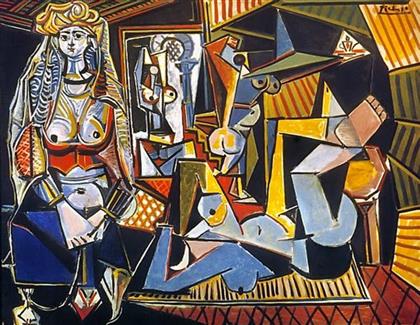
'Mulheres de Argel', de Pablo Picasso. 2015, 160,9 milhões de euros, leilão.


'Nu Couché' (Nu deitado), Amedeo Modigliani. 2015, 158 milhões de euros, leilão.


Salvator Mundi, Leonardo, Christie's veiling

Wanneer kunstwerken de duurste objecten ter wereld worden: veiling bij Christie's


Salvator Mundi ( "Christus als Redder van de wereld") door Leonardo da Vinci, 1500 toont Christus zegen met zijn rechterhand omhoog en vingers gekruist terwijl een sfeer van kristallijn gesteente in zijn linkerhand, en merkt zijn rol als redder van de wereld en meester van de kosmos (de 'hemelse bol' staat voor de hemel).

Er wordt aangenomen dat dit schilderij een kopie is van een verloren origineel; Het werd herontdekt in 2005, gerestaureerd en opgenomen in een tentoonstelling van werken van Leonardo in de National Gallery in Londen in 2011-2012. De aanvaarding als origineel werk van Leonardo da Vinci is niet algemeen, maar voor de kunstmarkt doet dat niet ter zake.
Het schilderij werd verkocht op een veiling bij Christie's in New York op 15 november 2017 voor 450.312.000 USD (450 miljoen), waardoor het de duurste schilderij in de geschiedenis maakt.

Waarom betaal je zo veel voor kunstwerken omgezet in eenvoudige objecten? Om welke reden dan ook, maar niets heeft te maken met de wil om van het kunstwerk te genieten. Het is een doel van de economische macht te tonen, hobby's bezit en accumulatie van dure items te voldoen, kan het bijna transparant redenen. Iedereen, behalve de behoefte om te genieten van een kunstwerk voor wat het is.


De manier waarop de markt op dit niveau werkt, daagt de verbeelding uit; als iets dat een paar honderd dollar kosten in een korte tijd kan miljoenen of honderden miljoenen unieke kunst en de magie van speculatieve operaties kosten. In 2005 werd het schilderij gekocht voor minder dan $ 10.000 in New Orleans, VS. Na een zorgvuldige restauratie, Dianne Dwyer Modestini aan de universiteit van New York, werd geverifieerd als een schilderij van Leonardo en tentoongesteld in de National Gallery. In 2013 kocht de Zwitser Yves Bouvier het schilderij voor 75 miljoen dollar in een privéverkoop van Sotheby's, New York. Daarna werd het verkocht aan de Russische Dmitry Rybolovlev voor US $ 127,5 miljoen. Uiteindelijk werd het in het jaar 2017 voor $ 450.312.500 verkocht.

Momenteel is de ranglijst van de duurste schilderijen:

Salvator Mundi ', door Leonardo da Vinci. Verkocht in 2017 op een veiling voor 382.100.000 euro. (450 miljoen dollar)

'Interchange', door De Kooning. 2016, 255 miljoen euro, privéaankoop.


'Kaartspelers', door Paul Cézanne. 2012, 191 miljoen euro, privébedrijf.


Nafea Faa Ipoipo (Wanneer je trouwen?), Paul Gauguin. 2014, 178 miljoen euro.


'Vrouwen van Algiers', door Pablo Picasso. 2015, 160,9 miljoen euro, veiling.


'Nu Couché' (naakt), Amedeo Modigliani. 2015, 158 miljoen euro, veiling.


Salvator Mundi, Leonardo, asta di Christie's

Quando le opere d'arte diventano gli oggetti più costosi del mondo: Auction at Christie's


Salvator Mundi ("Cristo come salvatore del mondo") di Leonardo da Vinci, dell'anno 1500 mostra Cristo, benedizione con la mano destra sollevata e le dita incrociate mentre tiene nella mano sinistra una sfera di roccia cristallina, notando la sua funzione di salvatore del mondo e maestro del cosmo (la 'sfera celeste' rappresenta il cielo).

Si ritiene che questo dipinto sia una copia di un originale perduto; È stato riscoperto nel 2005, restaurato e incluso in una mostra con opere di Leonardo alla National Gallery di Londra, nel 2011-2012. L'accettazione come opera originale di Leonardo da Vinci non è generale, ma per il mercato dell'arte questo dettaglio non ha importanza.
Il dipinto è stato venduto all'asta da Christie's a New York, il 15 novembre 2017, per 450.312.000 di dollari (450 milioni), il che lo rende il dipinto più costoso della storia.

Perché paghi così tanto per le opere d'arte convertite in oggetti semplici? Per qualsiasi motivo, ma nulla di relativo alla volontà di godere dell'opera d'arte. È un oggetto per dimostrare il potere economico, per soddisfare gli hobby del possesso e dell'accumulo di oggetti costosi, può essere per ragioni poco trasparenti. Chiunque, eccetto per la necessità di godere di un'opera d'arte per quello che è.


Il modo in cui il mercato funziona a questo livello sfida l'immaginazione; per qualcosa che costa poche centinaia di dollari, in breve tempo può costare milioni o centinaia di milioni grazie all'arte e alla magia di operazioni speculative uniche. Nel 2005, il dipinto è stato acquistato a meno di $ 10.000 a New Orleans, negli Stati Uniti. Dopo un attento restauro, di Dianne Dwyer Modestini presso l'Università di New York, è stato autenticato come un dipinto di Leonardo ed esposto nella National Gallery. Nel 2013, lo svizzero Yves Bouvier ha acquistato il dipinto per 75 milioni di dollari in una vendita privata di Sotheby's, New York. Poi è stato venduto al russo Dmitry Rybolovlev per 127,5 milioni di dollari. Infine, nel 2017 è stato venduto per $ 450.312.500.

Attualmente, la classifica dei dipinti più costosi è:

Salvator Mundi ', di Leonardo da Vinci. Venduto nel 2017, all'asta, per 382,1 milioni di euro. (450 milioni di dollari)

'Interchange', di De Kooning. 2016, 255 milioni di euro, acquisto privato.


'Giocatori di carte', di Paul Cézanne. 2012, 191 milioni di euro, operazione privata.


Nafea Faa Ipoipo (Quando sposerai?), Di Paul Gauguin. 2014, 178 milioni di euro.


'Women of Algiers', di Pablo Picasso. 2015, 160,9 milioni di euro, asta.


'Nu Couché' (Nudo sdraiato), Amedeo Modigliani. 2015, 158 milioni di euro, asta.


Salvator Mundi, Leonardo, Christie's auction

When works of art become the most expensive objects in the world: Auction at Christie's


Salvator Mundi ("Christ as savior of the world") by Leonardo da Vinci, from the year 1500 shows Christ, blessing with his right hand raised and fingers crossed while holding a sphere of crystalline rock in his left hand, noting his role as savior of the world and master of the cosmos (the 'celestial sphere' represents the sky).

It is believed that this painting is a copy of a lost original; It was rediscovered in 2005, restored and included in an exhibition with works by Leonardo at the National Gallery in London, in 2011-2012. The acceptance as Leonardo da Vinci's original work is not general, but for the art market that detail does not matter.
The painting was sold at auction by Christie's in New York, on November 15, 2017, for 450,312,000 USD (450 million), which makes it the most expensive painting in history.

Why do you pay so much for works of art converted into simple objects? For any reason, but nothing related to the will to enjoy the work of art. It is an object to demonstrate the economic power, to satisfy hobbies of possession and accumulation of expensive objects, it can be for little transparent reasons. Anyone, except for the need to enjoy a work of art for what it is.


The way the market works at this level challenges the imagination; for something that costs a few hundred dollars, in a short time can cost millions or hundreds of millions by art and magic of unique speculative operations. In 2005, the painting was purchased for less than $ 10,000 in New Orleans, USA. After careful restoration, by Dianne Dwyer Modestini at the University of New York, it was authenticated as a painting by Leonardo and exhibited in The National Gallery. In 2013, the Swiss Yves Bouvier bought the painting for 75 million dollars in a private sale of Sotheby's, New York. Then it was sold to Russian Dmitry Rybolovlev for US $ 127.5 million. Finally, in the year 2017 it was sold for $ 450,312,500.

Currently, the ranking of the most expensive paintings is:

Salvator Mundi ', by Leonardo da Vinci. Sold in 2017, at auction, for 382.1 million euros. (450 million dollars)

'Interchange', by De Kooning. 2016, 255 million euros, private purchase.


'Card players', by Paul Cézanne. 2012, 191 million euros, private operation.


Nafea Faa Ipoipo (When will you marry?), By Paul Gauguin. 2014, 178 million euros.


'Women of Algiers', by Pablo Picasso. 2015, 160.9 million euros, auction.


'Nu Couché' (Nude lying down), Amedeo Modigliani. 2015, 158 million euros, auction.


Salvator Mundi, Leonardo, Christie aukciója

Amikor a műalkotások a világ legdrágább tárgyává váltak: Aukció a Christie-ben


Salvator Mundi ( „Krisztus a világ Megváltója”) Leonardo da Vinci, 1500 azt mutatja, Krisztus áldását jobbjával emelt, drukkolás, miközben egy gömb kristályos kőzet bal kezében, megjegyezve, az ő szerepe, mint megmentő a világ és a kozmosz mestere (az "égi szféra" az ég).

Úgy gondolják, hogy ez a festmény egy elveszett eredeti példánya; Azt fedezték fel 2005-ben, felújított és szerepel egy kiállítás a Leonardo, a londoni National Gallery 2011-2012. Leonardo da Vinci eredeti munkájának elfogadása nem általános, de a művészeti piac számára ez a részlet nem számít.
A festmény árverésre által Christie New Yorkban november 15-én 2017. 450.312.000 USD (450 millió), ami miatt a legdrágább festmény a történelemben.

Miért fizetsz annyira a tárgyakból átalakított műalkotásokért? Bármely okból, de semmi sem azzal a szándékkal, hogy élvezhesse a műalkotást. Ez egy objektum, hogy bizonyítsa a gazdasági hatalom, hogy eleget hobbi birtoklása és felhalmozási drága termékek, akkor szinte átlátható okokból. Bárki, kivéve azt az igényt, hogy élvezze a műalkotást, ami az.


A piac ezen a szinten működik a képzelőerővel szemben; mint valami, a költségek egy pár száz dollárt, hogy rövid idő is kerülhet több millió vagy több százmillió egyedülálló művészeti és a mágia a spekulatív műveletek. 2005-ben a festményt kevesebb mint 10 000 dollárban vásárolták meg New Orleans-ben, az USA-ban. Gondos restaurálás, Dianne Dwyer Modestini a University of New York, hitelesített volt, mint egy festmény Leonardo és kiállított a Nemzeti Galériában. 2013-ban a svájci Yves Bouvier megvásárolta a festményt 75 millió dollárért a Sotheby's, New York egyéni értékesítésében. Ezután az orosz Dmitry Rybolovlevért értékesítették 127,5 millió dollárért. Végül 2017-ben 450,312,500 dollárért adták el.

Jelenleg a legdrágább festmények rangsorolása:

Salvator Mundi ", Leonardo da Vinci. Eladásra 2017-ben, aukción, 382,1 millió euró. (450 millió dollár)

"Interchange", De Kooning. 2016, 255 millió euró, magánvásárlás.


"Kártya játékosok", Paul Cézanne. 2012, 191 millió euró, privát üzemeltetés.


Nafea Faa Ipoipo (Mikor házasodik meg?), Paul Gauguin. 2014, 178 millió euró.


Pablo Picasso "Algériák nõi". 2015, 160,9 millió euró, aukció.


"Nu Couché" (Nude feküdt le), Amedeo Modigliani. 2015, 158 millió euró, aukció.


Salvator Mundi, Leonardo, Christies Auktion

Wenn Kunstwerke die teuersten Objekte der Welt werden: Auktion bei Christie's


Salvator Mundi ("Christus als Erlöser der Welt") von Leonardo da Vinci, aus dem Jahr 1500, zeigt Christus, segnend mit erhobener rechter Hand und Daumen gedrückt, während er eine Kugel aus kristallinem Stein in seiner linken Hand hält und seine Funktion als Retter feststellt der Welt und Meister des Kosmos (die 'Himmelssphäre' repräsentiert den Himmel).

Es wird angenommen, dass dieses Gemälde eine Kopie eines verlorenen Originals ist; Es wurde 2005 wiederentdeckt, restauriert und 2011-2012 in eine Ausstellung mit Werken von Leonardo in der National Gallery in London aufgenommen. Die Akzeptanz als Original von Leonardo da Vinci ist nicht allgemein, aber für den Kunstmarkt spielt dieses Detail keine Rolle.
Das Gemälde wurde am 15. November 2017 bei Christie's in New York für 450.312.000 USD (450 Millionen) versteigert, was es zum teuersten Gemälde der Geschichte macht.

Warum bezahlst du so viel für Kunstwerke, die in einfache Objekte umgewandelt werden? Aus irgendeinem Grund, aber nichts mit dem Willen, das Kunstwerk zu genießen. Es ist ein Objekt, um die wirtschaftliche Macht zu demonstrieren, um Hobbys des Besitzes und der Ansammlung von teuren Gegenständen zu befriedigen, es kann für kleine durchsichtige Gründe sein. Jeder, bis auf die Notwendigkeit, ein Kunstwerk für das zu genießen, was es ist.


Die Art, wie der Markt auf dieser Ebene funktioniert, fordert die Phantasie heraus; Für etwas, das ein paar hundert Dollar kostet, können in kurzer Zeit Millionen oder Hunderte Millionen durch Kunst und Magie einzigartiger spekulativer Operationen kosten. Im Jahr 2005 wurde das Gemälde für weniger als 10.000 US-Dollar in New Orleans, USA erworben. Nach sorgfältiger Restaurierung wurde sie von Dianne Dwyer Modestini an der Universität von New York als Gemälde von Leonardo ausgestellt und in der National Gallery ausgestellt. Im Jahr 2013 kaufte der Schweizer Yves Bouvier das Gemälde für 75 Millionen Dollar in einem privaten Verkauf von Sotheby's, New York. Dann wurde es für 127,5 Millionen US-Dollar an den Russen Dmitry Rybolovlev verkauft. Schließlich wurde es im Jahr 2017 für $ 450.312.500 verkauft.

Derzeit ist das Ranking der teuersten Gemälde:

Salvator Mundi ', von Leonardo da Vinci. Verkauft in 2017, auf einer Auktion, für 382,1 Millionen Euro. (450 Millionen Dollar)

"Austausch", von De Kooning. 2016, 255 Millionen Euro, Privatkauf.


"Kartenspieler" von Paul Cézanne. 2012, 191 Millionen Euro, privater Betrieb.


Nafea Faa Ipoipo (Wann wirst du heiraten?), Von Paul Gauguin. 2014, 178 Millionen Euro.


"Frauen von Algier", von Pablo Picasso. 2015, 160,9 Millionen Euro, Auktion.


'Nu Couché' (Nude liegend), Amedeo Modigliani. 2015, 158 Millionen Euro, Auktion.


jueves, 25 de febrero de 2016

The most expensive paintings and reasons for buying

The most expensive paintings in the world why some people pay so much for them?


When there are art auctions, public or private, fabulous sums are paid for a work of art. Of millions or tens of millions years about 25 years ago, now known prices expressed in hundreds of millions of dollars. Are they worth both these works really?
A work of art has an intrinsic value that is based on the quality of work, the car, the related facts, creation time, legends and other own details. Extrinsic value refers to the market value also considers the intrinsic value, the profit margin set by the sellers after a marketing job that creates and maximizes expectations, identifying potential buyers and end sales process .

Usually, the galleries form a kind of cartel by which set in secret, the transaction values ​​and even appear to act independently, they share inside information about prospective customers and other details. "Production" (ie, works of art) gradually take them to market.


In the art market, supply is fixed and demand is shifted to the right so that equilibrium is achieved at higher prices. Vendors or dealers have discovered the mechanism for causing the curve to shift well and equilibrate at very high prices. One is the identification of buyers who do not want the artwork itself but for other reasons.


The following chart shows that genuine interest in the work of art, the artist's work, from the emotional connotation that entails, is inversely related to the wreck paid. A normal person can offer an increasingly high price for a good job, but there is a limit not exceeding. If you can not buy it with the resources available, and although it does is frustrated, not you get sick of it.


It is also true that the more valuable or expensive is the work, there is greater enjoyment for possession and the possibility of contemplation, but also there is a limit of saturation. Obviously a work of art, painting and sculpture, low price does not generate as much satisfaction as the work more expensive. In the first case, can be works of students, early work and testing of a great artist; in the second case are the work of the senior artist, the artwork can have a legend behind a series of events that increase the intrinsic value.

People have a need to constantly increase the level of satisfaction, but everything has a limit. There is a price at which, and no additional joy is experienced. It's like wine. You can be the best wine in the world, the most expensive, but after a certain number of glasses, does not feel it or think about the unique qualities.

Pc critical last price, the buyer no longer values ​​the work of art in itself but related to the transaction as satisfying to have more money than others (economic power) facts, displace other competitors (personal power), by be the holder of a work coveted by many; it is very foreign to what you expect from a true art lover reasons.


The following figure shows the degree of distortion is observed in the assessment of the work of art in relation to the price. The higher the price, this distortion is increased. In the first part, before the saturation limit, the share of the demand curve D shows the normal behavior in which you pay extra to have the ownership of a work of art that is meaningful to the buyer. The buyer is satisfied by to admire your artwork.

On the demand curve D1, the distortion is evident in the behavior of the buyer. is not satisfied with the work of art in itself, but the knowledge of owning property, a valuable object. The buyer is satisfied for comparing a work of art, no matter who is not representing. They do not care a painting by Giotto, the Mona Lisa or a work of Picasso.

On the demand curve D2, the dominant feeling in the buyer is no longer even the possession of a valuable object with aesthetic content, but the feeling of raw power, the euphoria has to have shifted to other competitors, perhaps with some of them it was in direct competition now and savor his triumph.

D3 demand, the distortion is high. The move prosaic interests absolutely everybody that relates to art. Here the pleasure of paying more than all, the possibility of increasing wealth selling this work to others (speculation) is identified. Other less healthy intentions as money laundering also covers. It is not uncommon for many valuable works of art are in the hands of individuals or heads of groups outside the law.

In any case, it is true that almost none of them appreciate the intrinsic value of the work that will be saved in their armored tanks, none of them has the sensitivity to appreciate the colors, shapes, contrasts or facts about these works. They bought a very expensive object and keep a time to sell it at a profit.


-de-todos-los-tiempos.blogspot.pe/2016/02/10-10-1.html     

martes, 23 de febrero de 2016

The ten most expensive paintings

The ten most expensive paintings in the world

Multiple lists circulating on the Internet about "the 10 most expensive paintings of all time," or titles like that. However, most of these lists are incorrect, being outdated, ignoring the private sales, focusing only on the world of auctions. Here is a list that purports to be accurate and current, and even if it were not, presents a reasonable picture of the market "top art".


1. Paul Gauguin. "Nafea faa Ipoipo? (When you get married?)", 1892
300 million (adjusted for price inflation: 258400000)
Private sale, early 2015. Sales Rudolf Staechelin Family Trust. Buyer: Qatar Museums?.


2. Paul Cezanne. "The Card Players", 1892-1893
250 million (273 million). Private sale, 2011. Sales George Embiricos. Buyer: Qatar Royal Family.


3. PABLO PICASSO. "Les Femmes d'Alger (Version" O ")," 1955
179.4 million dollars (179.4 million). Christie's New York, May 2015. Seller: Private collection, Saudi Arabia. Buyer: anonymous.


4. Amedeo Modigliani. "Nu couche (lying naked)", 1917-1918
170.4 million dollars (170.4 million). Christie's New York, November 2015. Seller: Private collection. Buyer: Liu Yiqian.


5. PABLO PICASSO. "La Reve (The Dream)", 1932
$ 155 million (157.5 million). Private sale, 2013. Sales Steve Wynn. Buyer: Steven A. Cohen.


6. FRANCIS BACON. "Three Studies of Lucian Freud", 1969
$ 142.4 million (145 million). Christie's New York, 2013. Sales Francesco De Simone Niquesa (?). Buyer: Anonymous.


7. JACKSON POLLOCK. "Number 5, 1948", 1948
140 million (165 million). Private sale, 2006. Sales David Geffen. Buyer: David Martinez.


8. Willem de Kooning. "Woman III", 1952-1953
$ 137.5 million (162 million). Private sale, 2006. Sales David Geffen. Buyer: Steven Cohen.


9. GUSTAV KLIMT. "Adele Bloch-Bauer", 1907
135 million (158 million). Private sale, 2006. Buyer: Ronald Lauder.


10. Edvard Munch. "The Scream", 1895
$ 119.9 million. Sotheby's New York, May 2012. Buyer: anonymous

The art market moves millions and expectations as they change the tastes and trends motivated by speculative galleries and private collectors, favorite pictures also change.

Reference list the ten most expensive works in 2006.


1. Gustav Klimt, "Portrait of Adele Bloch Bauer" (1912) $ 87.9 million. anonymous buyer


2. Paul Gauguin. "The man with the ax" (1891), 40.3 million anonymous buyer.


3. Gustav Klimt. "Birkenwald" (1903) 38 million anonymous buyer.


4. Ernst Ludwig Kirchner's "Berliner Straatenszene" (1913), 38 million Buyer: New German art gallery in New York.


5. Gustav Klimt. "Apfelbaum" (912) 33000000, anonymous buyer.


6. Gustav Klimt. "Hauser in Unterach am Attersee" (1916), $ 31.4 million, anonymous buyer.


7. Egon Schiele. "Eizelne Hauser" (1915), 222 400 000 anonymous buyer.


8. Amedeo Modigliani. "Venus" (1917), 15.9 million; anonymous buyer.


9. Pablo Picasso. "Tomato Plant" (1944) 13.5 million anonymous buyer.


10. Pablo Picasso. "Femmes a la fontaine" (1901) 12900000, anonymous buyer

In a next installment we will try to show the reason why such large sums are paid. Apparently, it's not always love the art that motivates the decision to purchase, for the buyer, while looking for vendors is always a great business opportunity the volatility in tastes and preferences. Clearly the result of marketing work galleries and sellers.

Inflation is remarkable in art. The highest price of 2006 (87.9 million) at the highest price in 2015 (258 400 000) is a 294% inflation. Notable business for galleries. Although it is not the same painting, the figure shows the general trend. A painting by Gustav Klimt, apparently perennial favorite with Picasso, is on both lists and the two periods a variation of 54% is shown.

It is also a shame that the paintings included in any list is enclosed in dark underground chambers, away from the world, and that the owner did not even take them out and just think of the millions who will give the sale the next buyer.

References

Las pinturas más caras jamás vendidas